What to See in Bentota: A Sandspit, Two Rivers and Everything Behind Them
Updated September 24, 2026 · 9 min read
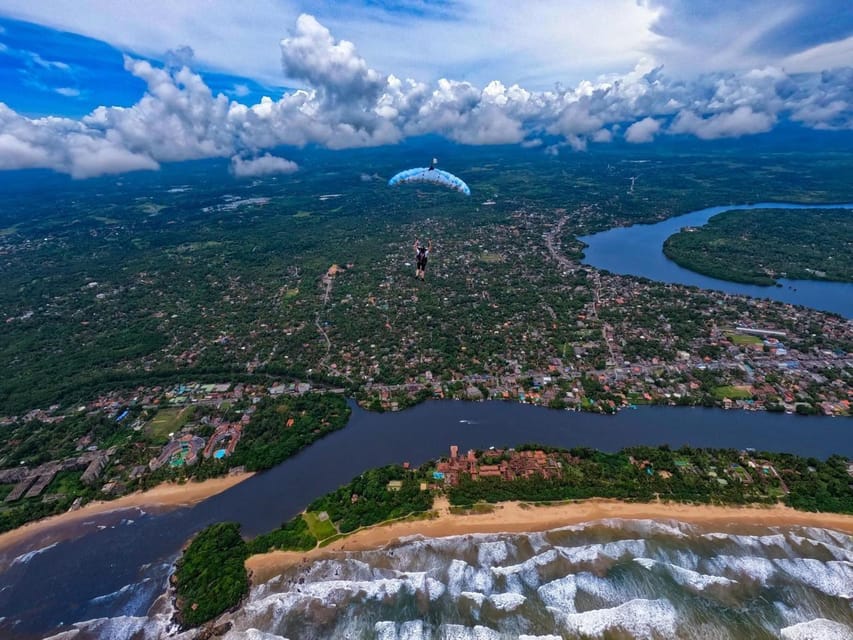
Bentota is small. That is the first thing to know, and it is not a criticism: the resort strip is roughly two kilometres of hotels on a sandspit, with the Indian Ocean on one side and the Bentota Ganga on the other, and it takes about twenty-five minutes to walk from end to end.
The second thing to know is that almost nothing worth seeing is on that strip. It is all within half an hour of it — gardens, temples, a Ramsar wetland, turtle hatcheries, a mask-carving town, and the gateway to the rest of the south. Bentota is a base, and it is an unusually good one.
Start with the geography, because it explains the prices
The river runs parallel to the sea behind the hotels and meets it at the bridge. That produces three different bodies of water within a few hundred metres of each other, and almost everything sold here happens on one of them:
- the open sea — surf, current, and a season
- the river and lagoon — flat, sheltered, and where the boats and the jet skis actually go
- the Madu Ganga, a much larger wetland twenty-odd kilometres south at Balapitiya
Across the bridge is Aluthgama, which is the real town: the market, the bus stand, the railway station and the temple. Bentota has hotels; Aluthgama has a working town. Walk over.
North along the same coast are Beruwala and Kalutara; south are Induruwa, Kosgoda, Balapitiya, Ambalangoda and eventually Hikkaduwa and Galle. It is one continuous ribbon of coast road, and distances are short in kilometres and long in minutes.
Our whole listing for this coast runs to 142 offers, from €10.54, with a median of €68.04 — that median is the honest cost of a proper day out from here, and the bottom of the range is a banana boat.
The five things most worth your time
1 · The river safari
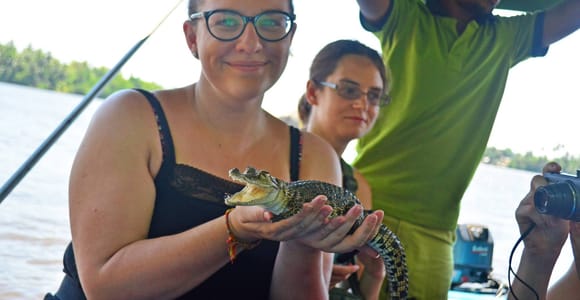
This is Bentota’s signature, and it deserves it. Two hours in an open boat through mangrove channels, with water monitors, crocodiles, kingfishers and macaques, from €17.57. The most-reviewed offer in our listing for this coast is one of these trips — 233 reviews at 4.9 stars.
There are two rivers on offer and they are not the same trip — which river, what you see, and the part of the advertising worth thinking about is the longer version. The full river listing holds 66 offers.
2 · The two Bawa gardens
Geoffrey Bawa’s Lunuganga, twenty minutes inland at Dedduwa, is one of the most influential gardens made anywhere in the twentieth century, and his brother Bevis’s Brief Garden is a few kilometres north near Beruwala.
Lunuganga opens only for guided tours, at 11 a.m., 2 p.m. and 3 p.m. Nobody tells you that until you are standing at the gate at half past twelve. The rest of the practical detail — the foreign rate, the steps and inclines, what to combine it with — is in the inland half-day.
3 · Kande Viharaya
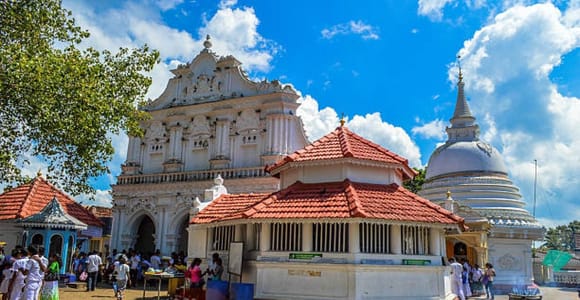
The temple on the hill at Aluthgama, founded in 1734, with a seated Buddha of 48.8 metres finished in 2007 — among the tallest seated Buddhas in the world, and five minutes from most hotels. No ticket, no queue, and three pieces of etiquette that genuinely matter — they are spelled out in the inland half-day.
4 · The turtle hatcheries
Kosgoda, eleven kilometres south, has been hatching sea turtles since 1963, which makes it one of the oldest such places in the country. All five of the species that nest in Sri Lanka — green, leatherback, loggerhead, hawksbill and olive ridley — have been recorded on this stretch of coast, and all five were brought under full protection, eggs included, by an amendment to the Fauna and Flora Protection Ordinance in 1972.
The hatcheries themselves are not all alike, and the way some of them handle hatchlings and keep turtles in tanks for visitors has been criticised by conservation researchers for years. That is a real debate, not a scare story. If you go, look at how long animals stay in tanks and whether hatchlings are handled — and pick accordingly. The turtle listing starts at €13.89 with 30 offers, most of them combined with a river trip.
5 · The water, if you want speed on it
Jet skis, banana boats, wakeboarding, kayaks, diving and paramotoring, mostly on the lagoon rather than the sea, from €10.54. There is a catch worth knowing before you book — seventeen offers between them carry seven reviews, which changes how you should choose. The category page lists them all.
What Bentota is really for: everything within three hours
This is the argument for staying here rather than somewhere more famous. From this one spot:
Galle — the Dutch fort, a UNESCO World Heritage site, with ramparts you can walk round at sunset. Day tours combine it with a tea estate, stilt fishermen and Koggala Lake.
Udawalawe and Yala — elephants almost guaranteed at the first, leopards and long odds at the second. Which one to pick changed in September 2026, because Yala’s two main blocks are closed until 15 October.
Ella and the hill country — a very long day, sold from here at fifteen hours, with tea factories, waterfalls and the train.
Ambalangoda — the mask carvers, half an hour south. Nobody here sells it as a half-day of its own: in our listing the mask workshops appear only as a stop on larger tours, from €35.58, and only one of those names the Ambalangoda mask museum outright. If the masks are all you want, take a tuk-tuk.
The day-trip listing holds 71 offers from €28.11, and culture and gardens another 57 from €13.89. Between them that is most of what southern Sri Lanka has, reachable from one hotel.
Getting here, and getting about
From the airport. Bandaranaike International is roughly a hundred kilometres north of here, past Colombo. A private transfer is sold at €57.98 with 5 stars over 27 reviews and, per the booking page, takes two to three hours depending on traffic. The transfer listing has 16 offers from €24.60 — most guests need this drive twice, so it is worth booking both legs rather than improvising the return.
By train. Bentota is on the coastal line, and this catches people out: Bentota’s own stop is a halt, and most trains call at Aluthgama, about a kilometre north. Colombo Fort is a little over an hour and a quarter away on the faster services. The line runs along the sea for much of it and is one of the genuinely lovely train rides in Asia, for the price of a coffee.
Locally. Tuk-tuks, and that is the whole answer. A private tuk-tuk round of Kalutara is four hours for €13.89, which tells you what short hops cost.
Driving yourself is the unusual choice here. Sri Lanka drives on the left, and a foreign licence needs a local recognition permit issued on the basis of an International Driving Permit. The normal arrangement for visitors is a car with a driver, and almost every day trip listed here already is one.
When to come
The south-west monsoon puts rain on this coast from roughly May to September, and the dry, calm months on the west and south coasts run through the northern winter. That is why Bentota’s hotels were built for European charter traffic and why the strip fills from December.
None of which stops a trip in the shoulder months. Rain here arrives hard and leaves; the river trips run through it; the inland gardens are better in the wet than in the glare. What the monsoon genuinely changes is the sea — the beach in July is a different beach from the beach in January.
If you only have one day
River safari in the morning, Kande Viharaya before lunch, the 2 p.m. tour at Lunuganga, dinner you cooked yourself. Nothing in that list is more than half an hour from the bridge, and none of it is the beach — which is, in the end, the point about Bentota.